What good is a college education if students spend years accumulating credits but never earn a degree—or graduate without a clear path into the workforce?
It’s a question that matters not only to students and their families, but also to California’s small businesses, which depend on a skilled and capable workforce.
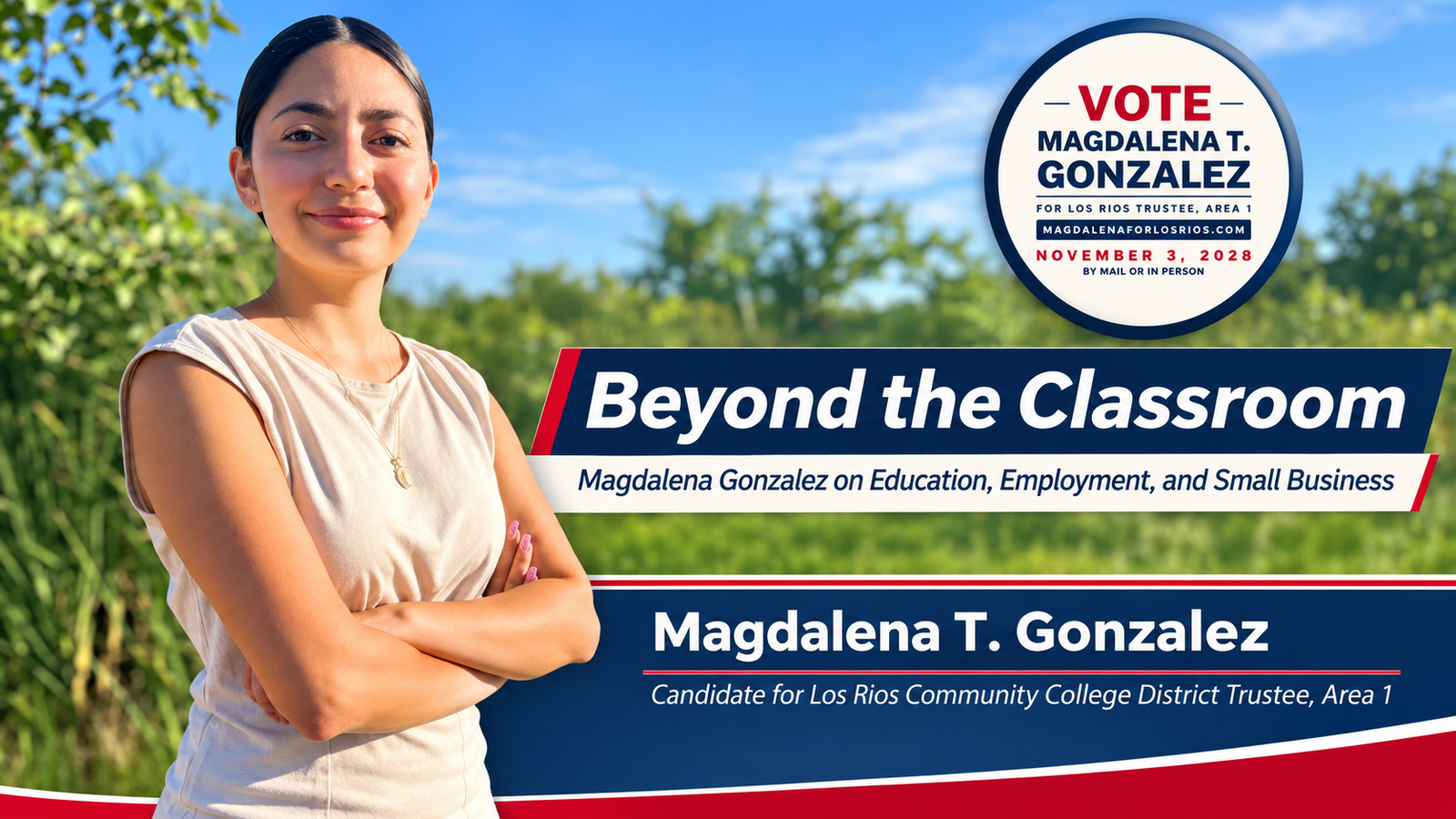
At a recent Capitol Business Alliance networking event, we met Magdalena T. Gonzalez, a 23-year-old candidate for Trustee Area 1 of the Los Rios Community College District. Our conversation turned to a problem that education and business leaders share: How do we help students move from the classroom into meaningful employment?
Gonzalez has firsthand experience navigating the community college system, having earned an associate degree before graduating from high school. Today, she works in employee benefits for the City of Sacramento and holds an MBA from Sacramento State.
We invited Gonzalez to share her vision for Los Rios and answer several questions about educational attainment, workforce development, and potential partnerships with the small-business community.
Meet Magdalena Gonzalez
CBA: Tell us about yourself, why you’re running, and your vision for Los Rios.
Gonzalez: My name is Magdalena T. Gonzalez, and I’m running for Los Rios Community College District Trustee, Area 1. I’m a Sacramento native, a Mexican American, and a proud product of public education.
I began taking classes at Sacramento City College while attending Washington Middle College High School and earned my associate degree before graduating from high school. I went on to earn my bachelor’s degree in human resource management from San José State University and my MBA from Sacramento State.
Los Rios helped make that journey possible. I’m running because I want more students to have a clear, supported path to their goals. Students should understand which classes they need, how to get help, and how their education connects to a degree, transfer, or career.
My priorities are completion, accountability, and opportunity. That means stronger advising and mentorship, bilingual outreach to families, access to required courses, and partnerships that connect learning with paid work experience.
As a trustee, I would work with fellow board members to align district priorities and spending with student success, while respecting the expertise of faculty and staff. I would ask for clear reporting on completion, transfer, employment outcomes, and where students are getting stuck.
My vision is a Los Rios where students can see their next step and receive the support to take it, and where our colleges remain a dependable source of opportunity for families, employers, and our community.
Making College More Accessible
CBA: You earned an associate degree before graduating high school. How can more students access similar opportunities?
Gonzalez: My experience showed me how much access to information and guidance matters. My father is a Los Rios counselor, but a student should not need a family connection to understand their options.
I would support stronger school district partnerships to expand dual enrollment and early college opportunities, with outreach before high school, bilingual information for families, and help with applications and course selection.
We also need to address barriers such as textbooks, technology, transportation, and scheduling. Students should understand how their courses connect to a certificate, degree, or transfer goal.
The Problem of Unfinished Degrees
CBA: How can Los Rios help students avoid accumulating credits without earning a degree or certificate?
Gonzalez: Students should know what they are working toward, which classes they need, and when they can finish. I would advocate for clear education plans, regular advising check-ins, and early outreach when students are accumulating credits that do not advance their goals.
We also need to ensure required courses are available when students need them.
As a trustee, I would ask for reporting on excess credits, course bottlenecks, and completion gaps to help guide budget decisions. Students deserve a system that respects their time, money, and effort.
Bridging the Gap Between Education and Employment
CBA: How can colleges help students transition from continuing education into meaningful careers?
Gonzalez: For students seeking employment or advancement, career planning should begin when they enter college. They should understand what their program prepares them to do, what employers expect, and whether additional training is needed.
I would support clearer connections between continuing education, career certificates, and degrees so students can build on their learning.
My human resources background also makes me value résumé preparation, interviewing, workplace communication, and understanding compensation and benefits.
Those skills should be paired with hands-on experience, employer connections, and follow-up after completion to see whether students are finding meaningful work.
Bringing Small Businesses Into the Classroom
CBA: How can Los Rios work with local businesses to expand internships, apprenticeships, and employment opportunities?
Gonzalez: Los Rios should make it easier for small businesses to offer internships, training, and jobs. I would support a clear point of contact to help employers connect with relevant programs and understand expectations for supervision and training.
Faculty and employers should regularly discuss workforce needs. For businesses unable to support a full internship alone, the district could explore shared projects or coordinated placements.
Apprenticeships should involve employers, labor partners, and training organizations as appropriate. I would prioritize paid opportunities with clear learning goals and evaluate whether they lead to employment or advancement.
Second Chances and New Opportunities
CBA: How can community colleges better prepare underprivileged and justice-involved youth for employment?
Gonzalez: Students facing financial hardship or reentry challenges need coordinated support alongside career training.
I would support stronger connections between Los Rios’ Rising Scholars and Re-Emerging Scholars programs, career education, community organizations, and employers willing to provide opportunities.
Students should have a consistent person helping them navigate enrollment, financial aid, academic planning, and employment preparation.
Transportation, housing support, mentorship, and paid work experience can help students stay engaged. They also need accurate information about employment and licensing requirements before committing to a program, followed by continued support as they enter the workplace.
A Potential Partnership With Capitol Business Alliance
CBA: How could Los Rios partner with Capitol Business Alliance to connect students with employers willing to provide training, mentorship, and jobs?
Gonzalez: I would welcome a partnership with Capitol Business Alliance that turns business connections into structured training, mentorship, and employment opportunities.
I would support starting with a manageable pilot: identify interested employers, understand their workforce needs, and connect them with relevant Los Rios programs.
Businesses could participate through career talks, workplace visits, mentorship, or paid internships, depending on their capacity.
Each placement should have clear expectations for training, supervision, scheduling, and compensation, with college staff supporting students and employers.
I would want the partnership to track completed placements, skills gained, job offers, and retention so we can expand what works.
Where Education Meets Economic Opportunity
The issues raised in our conversation extend well beyond a single election.
For students, a successful educational experience can mean earning a degree, transferring to a university, acquiring valuable skills, or finding a path to financial independence. For employers, it can mean access to workers who are prepared to contribute, grow, and build careers.
Los Rios already operates programs that could help bridge that divide, including its Work Experience and Internship Program and Paid Industry Experience Program, which helps connect eligible students with paid work opportunities.
Capitol Business Alliance sees an opportunity to explore how its growing network of entrepreneurs and local employers might complement these existing efforts, particularly for young people who face barriers to entering the workforce.
Whether through internships, mentorship, vocational training, or an employer willing to give someone a first chance—or a second chance—the relationship between education and business deserves greater attention.
The conversation with Magdalena Gonzalez raises a practical challenge for educators, policymakers, and employers alike: How do we ensure that educational opportunity translates into real economic opportunity?
That’s a conversation worth continuing.
Editor’s Note: Magdalena T. Gonzalez is a candidate for Los Rios Community College District Trustee Area 1 in the November 3, 2026, election. Capitol Business Alliance is a nonpartisan organization. Publication of this interview does not constitute a political endorsement. Other candidates are welcome to share their perspectives on issues affecting California’s business community.
Have a story or insight to share? CBA members and partners are welcome to contribute.